
How to Plan a Trip to Australia: Choosing Where to Go & for How Long
Updated August 2026
Planning a trip to Australia can feel daunting and overwhelming either diminishing the excitement of going or causing decision paralysis. I get it. It’s far. From most places, it’s VERY far! I’ve been blessed enough to travel there four times and I’m dreaming of making my next trip before my Australian nephew enters his teen years.
With Australia fresh on mind and being one of the best destinations I’ve been to, I thought I would help anyone looking to plan a trip! This guide will focus on trips that are weeks, not months long as that can feel more overwhelming from a planning point of view.
I’ve done both. Traveled the whole east coast of Australia, ventured to Tasmania as well over their winter months, and I’ve had ten day trips focusing on Sydney and the Blue Mountains. Whatever your goals, let’s plan a trip to Australia!
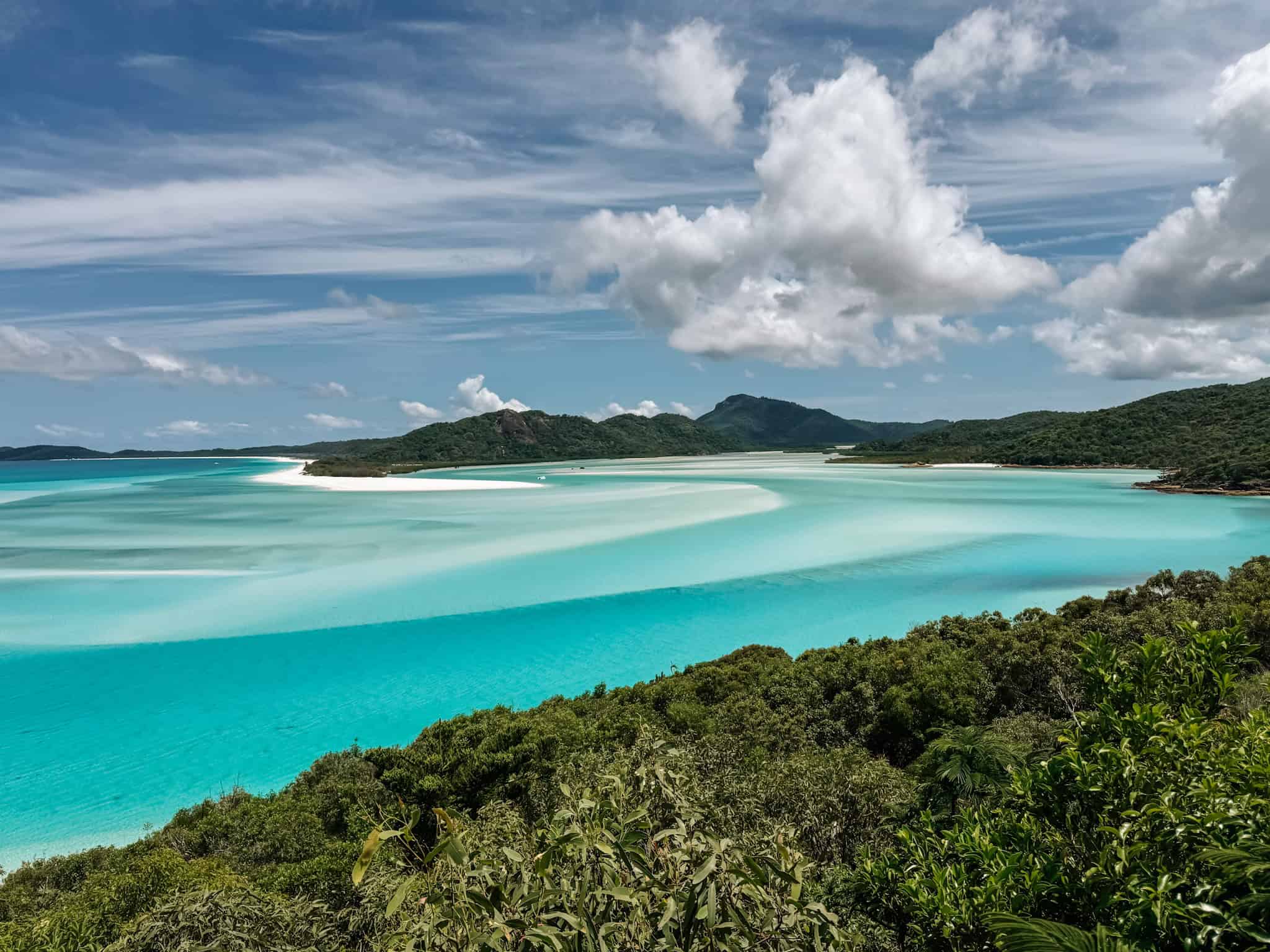
1 Getting to Australia
Getting to Australia can feel daunting, both in the actual journey and in the planning. Here are some things to consider.
Long Flights
The travel time to Australia is long and coming from the East coast of the United States, it’s VERY long. However, in some ways, the flight is easier than crossing the Atlantic.
Yes, it’s about five hours longer, but by the time you take off from the West coast of the U.S. you are TIRED. This can make it easier to sleep, or at least it helped me. You pass the international date line, causing a whole day to vanish and making the return, the longest day of your life.
Is the flight long? Yes! Is it doable? Also, yes!
Is it worth it? Absolutely, yes!
Booking Flights
For Australia from the U.S., direct flights have always been out of Los Angeles for me, but could also be offered from other major West coast cities. Booking tickets separately can save money, so don’t be afraid to try different searches to see if that can work for you!
Just ensure you are booking TO and FROM the same connecting airport and that you give yourself enough time to make your connecting flight.
I took this approach for Fiji and I gave myself four hours layover time, but on the return my flight from Fiji to Los Angeles it was considerably late in taking off. I made my connecting flight, but I was stressed! Since I booked them separately, the airlines wouldn’t be the wiser that my flight had been delayed.
Worst case, I’d have to purchase a one way ticket home, so it’s not the end of world and I’ve traveled enough to feel comfortable for this method. I just wanted to point that out, in case the amount of money you would be saving is minimal and you deem it worth it to spend the extra money for the airlines to decide your flight schedule.
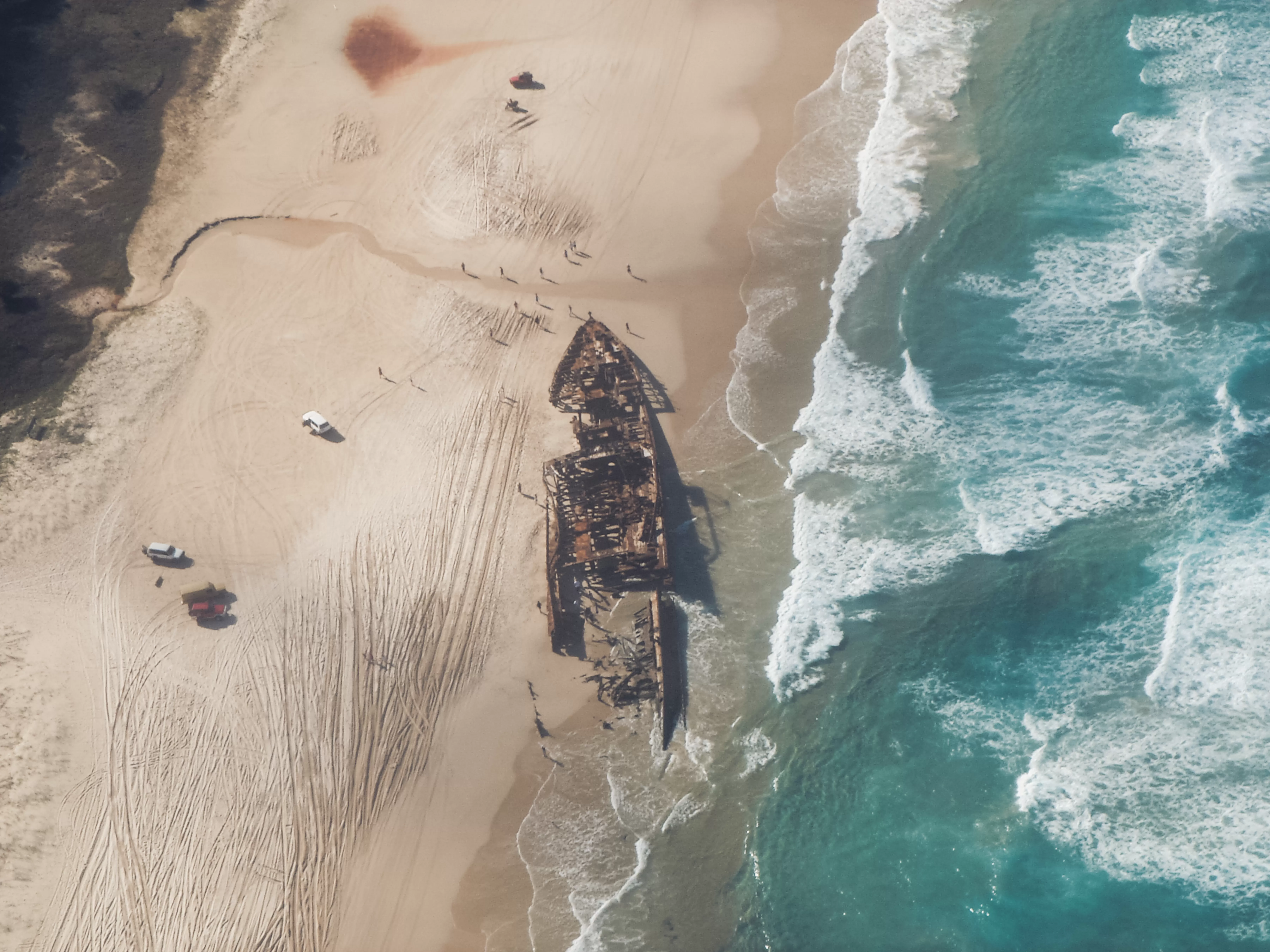
2 Length of Time in Australia
A lot of what I’m seeing on YouTube for Australia is people spending months traveling and exploring. However, most people are not that type of traveler.
From my experience, I don’t recommend going for less than ten days if you are coming from anywhere other than a major West Coast city that offers a direct flight to Australia.
Going to Australia you lose a day and you spend a day traveling. So if you take off on the 1st of the month, you arrive in Australia on the 3rd. Already your ten day trip is eight and you haven’t even started.
Two to three weeks is a good time for a solid trip! The challenge from here will be deciding what destinations in Australia to visit within that time.
3 Where to Go in Australia
Australia is massive! It is about the same size as the continental United States. So if someone asked you if you they could visit the Grand Canyon, New York, San Francisco, Las Vegas, Yosemite, Miami and Disney World or Disneyland in two or three weeks, you’d immediately tell them it’s impossible! Then you’d also tell them to narrow it down so they can enjoy each place they visit. The same is true for Australia!
I’ve created the below image of some of the top places to see in Australia. Some of these I’ve visited and some I’ve added to my Australia bucket list.
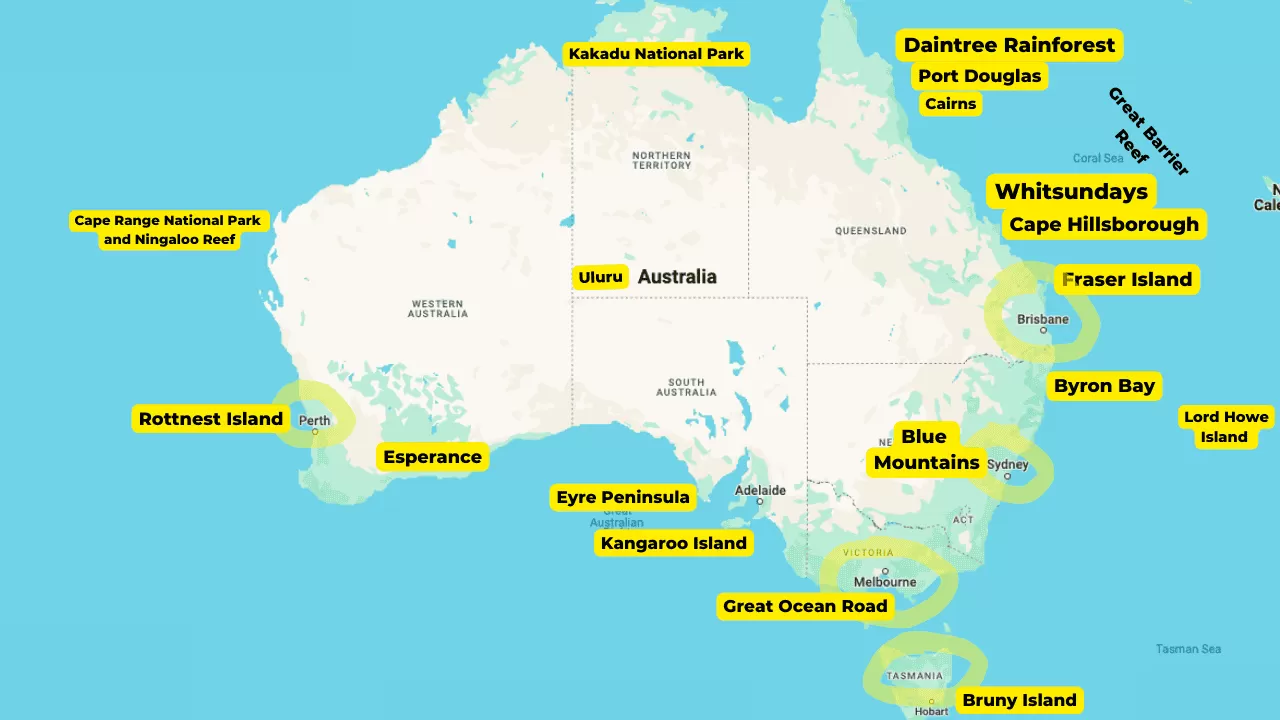
Questions to ask to help you narrow down your choices:
- What are my top two places to see?
- What type of weather do I want to experience based on the time of year?
- What is my budget?
Once you have an idea from the above questions, you can start to narrow down the trip.
What are my top two places to see?
For instance, let’s say your top two choices are The Great Barrier Reef and Uluru. You can plan your extra flights to these two destinations and since you’re flying into and out of Sydney, you can plan for Sydney and possibly the Blue Mountains as well!
That is three destinations and doable for two weeks in Australia. Maybe you want to add the Whitsundays, which may limit the time you spend in Sydney to one day. Perhaps you want to do Sydney and Melbourne.
Each city has plenty to explore and you can add the Great Ocean Road to your Melbourne itinerary and the Blue Mountains to your Sydney trip. That’s a fun and relaxed couple weeks. Add Tasmania and cut down on days in one or both of those cities.
The hardest part in planning a trip is deciding what to do that is reasonable and allows time to enjoy your trip! Narrowing down the options can be tough, but it’s imperative!
What type of weather do I want to experience based on the time of year?
The Southern Hemisphere is opposite to North America and Europe in the Northern Hemisphere. So their Winter is during our Summer and for warmer temps head North while the South is cold.
If you are heading to Australia in their Winter, the Great Barrier Reef will be pleasant while Melbourne and Tasmania will be cold!
If you want to avoid the cold, focus on things to do in Queensland, the Outback or Northern Australia as temps are mild during winter months and might actually be more pleasant than the Summer temperatures.
What is my budget?
The least favorite aspect of planning a trip, but a requirement in most cases. Unlike some other destinations, not many people will wing it if making the trek to Australia. It’s more likely you’ve already researched and saved according to the budget you’ve set forth.
Flights easily take up the bulk of your budget, but you can find ways to save in other areas if need be. Australia has a range of accommodation options with some areas having more options than others.
If you can’t afford one area, then just switch gears and research another. You might find getting to Uluru pricey, but Melbourne is easier and includes more hotel options. The trip will still be wonderful and the budget can be used as a tool to narrow down your choices, rather than a requirement that suffocates the fun.
4 When to Visit Australia
If you’ve decided where you want to go, and your dates are flexible, let’s discuss when to visit Australia. The reality is the best time to visit all depends on where you are going.
If you visit the United States in December for example, and want warm weather then Miami, the Florida Keys, and Hawaii are where you want to go. Those destinations will rarely get cold in the winter.
If you want to go skiing, then you’ll look at Utah, Colorado, and just about anywhere up north. Since the country is so large, the experience will be varied and the same is true for Australia.
I loved Sydney in March, though in July it wasn’t that cold, which is nice! I visited The Great Barrier Reef in the Australian winter and it was very pleasant. Melbourne in the winter was a bit cold for me, but not unbearable.
Overall, Australia is a year-round destination, but you may want to consider the weather per region or at least go with the right expectations.
| Destination | Best Time to Visit | Why |
|---|---|---|
| Sydney | September–November and March–May | Mild temperatures make spring and autumn ideal for exploring the city, beaches and surrounding areas. |
| Melbourne | March–May and September–November | Mild temperatures are great for exploring Melbourne and taking a road trip along the Great Ocean Road. |
| Great Barrier Reef | May–October | The dry season generally brings warmer, sunnier weather, lower rainfall and good visibility for snorkeling and diving. |
| Uluru | May to September | Temperatures are more comfortable than the extreme summer heat, making it easier to explore Uluru and the surrounding area. |
| Perth | March–May and September–November | Spring and autumn offer comfortable temperatures for exploring the huge variety of landscapes across Western Australia. |
| Tasmania | December–April | Summer brings the warmest temperatures and longest days, making it ideal for hiking, road trips and exploring Tasmania’s outdoors. |
| Brisbane & Gold Coast | March–May and September–November | Warm temperatures without the peak summer heat and humidity make these months great for beaches and exploring Queensland’s southeast coast. |
| Darwin & Kakadu | May–October | The dry season brings lower humidity, little rainfall and better conditions for exploring the Top End. |
5 Plan Your Australia Itinerary
You’ve made it to the point of deciding where to go! This is both the fun part and hard part! You can check out my blog posts on Destinations in Australia to start dreaming!
Start with the bucket list if you want epic places throughout the country, or choose based on region if you already have an idea where you want to go.
I’ve driven the east coast of Australia, visited Tasmania, snorkeled The Great Barrier Reef, and played soccer on Whitehaven Beach. I adore Sydney and loved the drive down the Great Ocean Road after visiting Melbourne.
Australia has so much to offer and the hardest part is truly narrowing it down for a two week trip!
- Bucket List Australia | 18 Ideas for a Trip Down Under (my Aussie brother-in-law helped me with this list)
- What to See in Queensland, Australia: 19 Epic Places to Explore
- What to See in New South Wales, Australia: 15 Diverse Places to Explore
6 Getting Around Australia
If you’re limited to a two or three week trip, then you’ll want to get from one major destination to another by plane. While I did drive the east coast of Australia, I did that over months, not weeks!
Driving is doable, but you’ll be wasting a lot of your time on the road if you are trying to visit places very far apart. From Sydney to Cairns (The Great Barrier Reef) is 27 hours by car for the fastest route and Melbourne is almost 9 hours from Sydney!
If you wanted to do all three of these places in one trip, you’d be spending most of the time driving. Of course, if you wanted to focus on one region, renting a car is great way to get around.
Driving in Australia is very easy as there is not much traffic outside the big cities of Melbourne and Sydney and the roads are in great condition! The only caveat I have for driving would be the Outback! That drive is very dangerous if you don’t know how to prepare for it!
Trains and buses are also options between some destinations, while public transportation is useful once you’re in Australia’s larger cities. I know my sister, who lives about four hours from Sydney, will drive two hours to the train and then take it to the airport.
Additionally, there is a train that crosses Australia, but you’ll be on it for four days, where a flight to Perth from Sydney is about five hours (similar to an east coast to west coast flight in the USA).
Overall, focus on flights unless you are sticking to one region of Australia.
7 Visas and Declarations
You will need to apply for a visa to visit Australia. See the official instructions on how to apply for a visitor visa to Australia. If you’re from an eligible country, the application process is done through an app and if you apply correctly, you’ll get an immediate response.
My first time visiting Australia on my own, I actually forgot about the visa! Thankfully, the airline agent took care of it for me on the spot, but don’t chance it. Get the visa in advance.
Declare Your Snacks
When you do travel to Australia, don’t take any nuts, seeds, dried fruit or dairy. So basically make sure you eat any trail mix snacks you brought on the plane.
I didn’t know this on one of my trips and I got a stern talking to from the customs agent. They are very serious, so if in doubt, declare it and be up front.
Here is a website on what is and is not allowed if you want to research prior to your trip.
Final Thoughts on Planning a Trip to Australia
Planning trips to the other side of the world can feel daunting. Planning a trip to a massive country can feel overwhelming. So I hope you now have a starting point for your trip!
I love Australia and despite my many trips and the fact my sister lives there, I still have so much of this country left to see!
Check out my other Australia guides as you plan your trip and I hope you have the best time in the land down under!



4 Comments
Comments are closed.