
Blue Light and Heart Rate Variability | The Surprising Way I Boosted My HRV Overnight
Updated March 2026
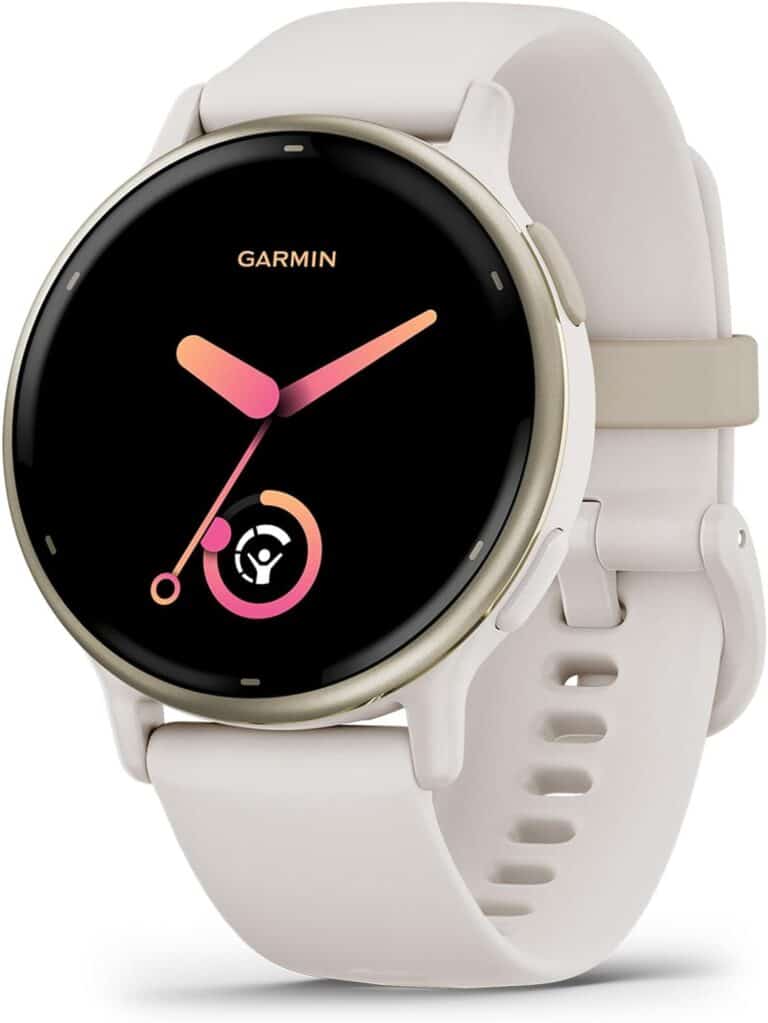
I recently learned about the connection between blue light and heart rate variability (HRV)! It was somewhat by accident. I’ve monitoring my HRV ever since I purchased my Garmin Vivoactive 5 watch. When I learned about artificial light and the harms of blue light, I decided to make a couple easy (for me) changes.
When I woke up to a big (for me) jump in my HRV, I was shocked! There are plenty of areas I need to grow in both the blue light and heart rate variability arenas, but blue light might be an easy low hanging fruit to improve your HRV score!
Here’s my experience and why I think it’s worth it for you to consider the blue light and heart rate variability connection.


What is HRV and Why It Matters
I’m definitely not an expert and I’m still learning what HRV is and why it matters myself. Here is what I’ve learned thus far. Heart Rate Variability, or HRV, is the measure of variation in time between each heartbeat. While that might sound like a bad thing at first, it’s actually a powerful indicator of how well your body is recovering and handling stress. A higher HRV typically means your nervous system is flexible and responsive. It’s a sign that your body is in a good state of balance, especially between the sympathetic (fight-or-flight) and parasympathetic (rest-and-digest) systems.
It matters because it’s said that HRV is one of the best markers we have for overall health and recovery. Many wearables, like my Garmin Vivoactive 5 watch, track HRV overnight to give insight into how your body is bouncing back from workouts, stress, or lack of sleep. It can even hint at overtraining or burnout before you feel it. There are many things that impact HRV, but the blue light and heart rate variability connection really surprised me!
The Surprising Role of Blue Light
I love podcasts and Culture Apothecary hosted expert Thaddeus Owen to discuss fixing your circadian rhythm. They discussed the positive impact of the sun and the negative impacts of artificial light, especially blue light.
He mentioned several studies around artificial light and the connection to weight gain. There was also mention of studies showing how light impacted sleep which also impacted overall health!
The big takeaways I got from the podcast include:
- Watching the sunrise and sunset
- Stop wearing sunglasses
- Be careful of the impact of screens and lights at night
- Model your sleep after the sun
- Use red lights if nightlight is needed
Studies About Light and Health
I’m not one to read studies thoroughly, but several studies were mentioned in the podcast and I wanted to confirm the blue light and heart rate variability connection, so I perused a few. There are definitely more out there, but I’ve linked some light related studies below.
Even logically, I think we are learning more and more that unnatural things can have negative impacts on our health. Of course, it seems like everything is bad these days and it can feel overwhelming! Well, at least to me. One thing I liked about this concept of light is there are free ways to try it and/or cheap items to buy, making it a low risk self experiment.
- Effects of Light at Night on Laboratory Animals and Research Outcomes
- Effects of Constant Light on the Circadian System in Rats
- Metabolic Effects of Light at Night are Time‐ and Wavelength‐Dependent in Rats
- Circadian disruption induced by light-at-night accelerates aging and promotes tumorigenesis in rats
🔹 1. Circadian Rhythm Disruption
- Light at night (LAN), especially blue light, delays melatonin production.
- Disrupts the sleep-wake cycle, making it harder to fall and stay asleep.
🔹 2. Sleep Quality
- Exposure to blue light before bed reduces REM and deep sleep.
- Leads to shorter sleep duration and lower sleep efficiency.
🔹 3. Melatonin Suppression
- Blue and white LED light significantly suppress melatonin, a hormone crucial for sleep and recovery.
- Lower melatonin is linked with poorer immune function and increased cancer risk (in shift workers, for example).
🔹 4. HRV and Autonomic Nervous System Impact
- Light exposure affects the autonomic nervous system balance.
- Bright artificial light in the evening can activate the sympathetic (“fight-or-flight”) system and lower HRV.
🔹 5. Mood and Mental Health
- Lack of natural light during the day and too much artificial light at night can increase risk for depression and anxiety.
- Light therapy is used as a treatment for seasonal affective disorder (SAD).
🔹 6. Metabolic Health
- Circadian misalignment from late-night light can impair glucose metabolism and increase risk of obesity and insulin resistance.
🔹 7. Hormone Regulation
- Disrupted circadian rhythm affects hormones like cortisol, testosterone, and leptin.
- Irregular light exposure may disrupt the timing of hormone release critical for metabolism and recovery.
Easy Ways to Implement “Light” Changes
Listening to the podcast he highlighted a few ways to improve how you are exposed to light. I will go through several of his suggestions and which ones I did and which ones I struggle to do, but would be beneficial (and free).
Sunrise and Sunset
The free thing he recommended on the podcast was simply to watch the sunrise and watch the sunset from outside! I’ve always loved natural light and lots of windows, but he really encourages being outside.
As someone who LOVES being outside, you’d think this would be easy for me, but no. I am not great at mornings. While I’ve successfully been going to bed earlier and waking up earlie, the extra step of going outside first thing seems so difficult. Maybe you can relate or maybe you think I’m crazy, but I struggle with this relatively simple and free recommendation.
Sunsets During My Travels
When I’m on vacation, I love to chase a sunset! The sunsets I saw during my 2 days in Tinos were some of my favorites! I also experienced firsthand the power of witnessing the sunset and its effect on my circadian rhythm during my solo trip to Fiji!
I’m not sure what the deal was when I was driving to the airport for my Fiji trip, but I felt wrecked. This wasn’t a good start for my five hour flight to Los Angeles, four hour layover, and then ten hours of flying to Fiji trip. When I got to Fiji it was early morning and I felt even worse.
I was too early to check-in to my hotel, but when I finally got my room I collapsed and took a very solid afternoon nap. Thankfully, I woke up a bit before sunset and was able to watch the sun dip below the horizon. Between the nap, watching the sunset and then a full night’s sleep that night, I was a new person and never had jetlag the rest of my trip!
Sunrise and Sunsets at Home
While I’m terrible at catching both at home, I definitely have experienced the benefits during my travels. I do have a lot of windows and will generally wake with the light, but windows are said to filter the light significantly.
This is an area I want to improve, but perhaps I should focus on the sunsets first!
Stop Wearing Sunglasses
Another simple suggestion he made was to stop wearing sunglasses outside. My pool girl last year told me she never wears sunglasses and never gets sunburned, which in Florida is quite a feat! I’m not ready to completely give up sunscreen, especially on beach days, but the sunglasses point intrigued me.
End of last year, my Walmart sunglasses finally broke after years of use! I was forced to buy another pair and did just that, but my new pair was significantly darker than my previous pair. This extra darkness was too much and I wore sunglasses less and less.
When I go on walks in the neighborhood, I rarely wear sunglasses and I’ve just naturally swapped out sunglasses for hats. Of course, there are days when I go from inside to outside in the middle of the day and it’s blindingly bright, but the dark sunglasses are too extreme in the other direction.
Natural Light on My Eyes
This point kind of ties in both the previous recommendations, but I have noticed if I don’t go outside at some point in the morning, my eyes get tired quicker from the artificial lights in my house or from my laptop!
I’ve noticed several times over the last year, my eyes get tired from the screen and I’d take a break by going on a walk. Within minutes of my eyes being exposed to the natural light and the outdoors they felt better! While this isn’t a scientific experiment, it’s something I have noticed on myself numerous times and it gave me food for thought when considering blue light and heart rate variability (HRV)!

Night Lights
Another recommendation he mentioned was getting rid of all blue light after dark! Street lights, phone, and night lights can all add blue light to your room!
I love sleeping with the curtains open so I can wake to the natural light, but there are so many street lights where I live! To remedy one major light coming into my room, I did close that curtain which helped significantly, but there are other lights indirectly shining into my room that perhaps I should do something about.
My bathroom is where I put a night light to avoid having to turn on the main light at night. The one I bought had different colors, but I stupidly used every color available except the ONE color I should use. After listening to the podcast, I changed the night light to red. Yes, it’s probably the creepiest color and offers the least amount of light, but it’s less invasive at night and the recommended color for nighttime.
Light Bulbs | Red and Amber
Another thing he mentioned was using red or amber colored light bulbs at night! I have two sets of lights in my kitchen and living room (great room) that are on two different light switches. There is one set I rarely use because I like bright light, but I decided to purchase bulbs and change up my night routine.
Once I had these amber colored light bulbs installed, I turned them on once the sun set. While I haven’t gone outside for sunset, I can see the evening sun dim through my windows easily. Since I’ve always liked a lot of light, I wasn’t sure I’d like this one. However, the blue light and heart rate variability connection only took one night to notice!
Light Bulbs I Purchased from Amazon: Amber Sleep Light Bulbs, Blue Light Blocking, A19 9W(60 Watt Equivalent) Dim Light Bulbs for Lamp
Orange Glasses | Blue Light Blocking
The final thing I’ll mention that I also implemented was blue light blocking glasses with orange lenses! I already had “blue light blocking” glasses but he mentioned clear lenses did nothing and he recommended yellow or orange.
Yellow he recommended during the day while indoors, but I have yet to implement this suggestion. The other recommendation was orange lenses to block blue light at night. Since I tend to be on my phone or laptop at night with TV on in the background, I figured I’d give this one a try!
There are expensive ones out there, but I bought some cheap ones. After all I wasn’t really convinced this would make a difference and I just didn’t want to spend a lot of money. Since I did notice an immediate impact, I may upgrade one day, but for now these are working just fine for me.
Glasses I Purchased from Amazon: DreamGaze 99.9% Blue Light Blocking Glasses for Better Sleep

My Experiment—Blocking Blue Light at Night
When I turned on the amber colored light bulbs and put on the orange blue light blocking glasses, I had no clue of the HRV blue light connection. I knew it was supposed to positively impact my circadian rhythm and health overall, but my HRV jumped 14 points the FIRST night of making these changes!
Ever since I purchased my Garmin Vivoactive 5 watch, I’ve checked my HRV every morning. While I am still learning about HRV, I know it’s a good marker to check for overall health and recovery. By monitoring it every morning I can consider the prior day’s activities, nutrition, and bedtime to begin determining what helps or hinders my recovery.
I’ve now had my Garmin over a year and half and I have never noticed a massive spike overnight. However, after using the glasses, changing my bathroom nightlight to red, and using the amber light bulbs, I couldn’t believe my HRV had such a huge spike.
Weight Training Day | Night Two
I planned to do a weight training workout and was excited to see if my HRV would remain elevated. It’s normal for the HRV to dip after an intense workout, but I wanted to see if the glasses and bulbs would keep the HRV higher than usual and cause less of a dip.
My HRV the night before jumped 14 points and only dropped 5 points on the weight training day! I couldn’t believe it!
Stress and Late Nights
It’s been close to a month since I’ve implemented these changes to my night routine. There is some added stress lately with having to look after my mum a bit, so there have been days that are less ideal on the HRV score.
However, the dips that have been more significant have been on days I get home after dark. Driving and see the blue light, showering in the blue light and being out of the quiet night time routine causes the biggest dips in my HRV. Even if I get into bed the same time as usual, the HRV will dip.
HRV Blue Light Connection
While I’m not an expert, I can certainly say there has been an improvement with my HRV after these simple changes! I’ll continue to monitor and maybe even try and implement the sunrise and sunset as well! Overall, I am stunned by this self experiment and will continue to explore the HRV and blue light connection.
My HRV Blue Light Connection Data
My HRV score will not impress, but it has slowly improved over the year and a half since I’ve been monitoring it! It’s been a wild year and a half as well, so having HRV as a metric has really helped as well.
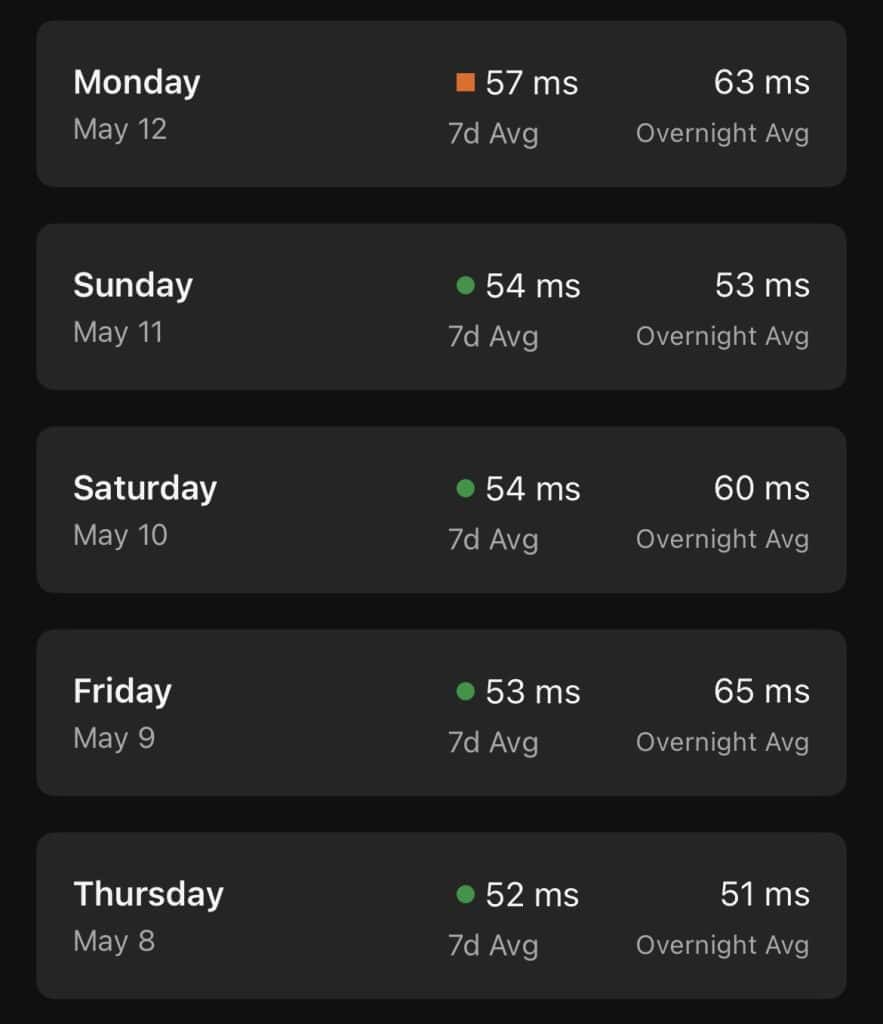
I went back and looked at my HRV and a good score was mid to upper 50s. There was one 60 ms score back in October of last year, but no repeat until addressing blue light.
Looking after my mum has brought on added stress, which makes this is even more amazing! Thursday night was when I implemented using the amber light bulbs and blue light blocking glasses, giving me the highest HRV I’ve had since actually monitoring it.
I did a weight training workout on Friday and kept the same nighttime routine, which still included working on my laptop with the blue light blocking glasses, and it only went down 5 points.
Had a stressful Saturday, but then another high HRV Sunday night. I’ve had higher HRV scores consistently when implementing a quiet and blue light blocking night time routine. It’s been such a sudden increase that it pushed me above my weekly average!
My weekly averages are showing an upward trend, though currently my numbers are higher than my weekly average. Even though I had been heading to bed earlier for the weeks prior to this, it never greatly impacted my HRV.
Checkout my Garmin vívoactive 5 Review
How You Can Try It Too
There are so many things that will positively impact your HRV. However, blue light blocking at night wasn’t one I expected to give instant results. It’s a relatively cheap experiment should you want to try it. Well, it’s cheap if you already have a device that monitors your HRV.
I’ll link the amber bulbs and orange blue light blocking glasses I purchased from Amazon. These are relatively inexpensive, but if it’s not in the budget, there are things you can try for free! Watch the sunrise and sunset, keep bright lights off at night, block any lights from coming in and don’t look at your phone at night.
I know some of those are easier than others. Since I get some work done at night, the glasses have helped block the blue light while still allowing me to be on my laptop. In a perfect world though, I would try to stay off screens!
Find what will work best for you in your current phase of life! I’m still surprised by the HRV blue light connection and want to continue improving in this area.

Blue Light and Heart Rate Variability (HRV)
I hope this post inspired you to explore the role light is playing in your life. This journey has only begun for me, and I hope to improve in this area as well as many other health related markers!
If you do give this a try, let me know how it goes for you!



One Comment
Comments are closed.